Start with the claim that must be proved
“Near redevelopment” can describe very different situations: an adopted urban plan, a project already under construction, an early association proposal, a railway improvement, or little more than a broker’s map arrow. The investment case should not begin with the developer’s rendering. It should begin with a testable statement.
A useful statement is specific: a defined public or private project is expected to improve a particular route, public space, employment base, retail offer, or station experience by an identified period; the subject property serves a tenant or buyer group likely to value that change; and the current purchase price does not already assume the entire benefit. Each part requires separate evidence.
Redevelopment can improve an area while a particular acquisition still underperforms. The completion date may move, the walk route may remain inconvenient, new rental supply may compete with the unit, or the seller may already be charging a large future-value premium. Treat the project as one underwriting variable, not as permission to relax property-level due diligence.
Verify the official project and its present stage
Record the project’s formal name, boundary, responsible public authority, developer or association, urban-planning status, construction status, stated uses, transport works, and currently published schedule. Save the source and access date. Tokyo Metropolitan Government maintains official material on urban redevelopment projects, but schedules and project descriptions can change; the live public record should be rechecked before every investment decision.
Separate four stages in the file: concept or study, formal planning and approvals, construction, and operation. A target completion year at concept stage is not equivalent to a building topped out under an active works programme. Note unresolved land assembly, demolition, infrastructure interfaces, financing, litigation, and approvals where disclosed. Do not invent a probability from silence; identify what is known and what still depends on future acts.
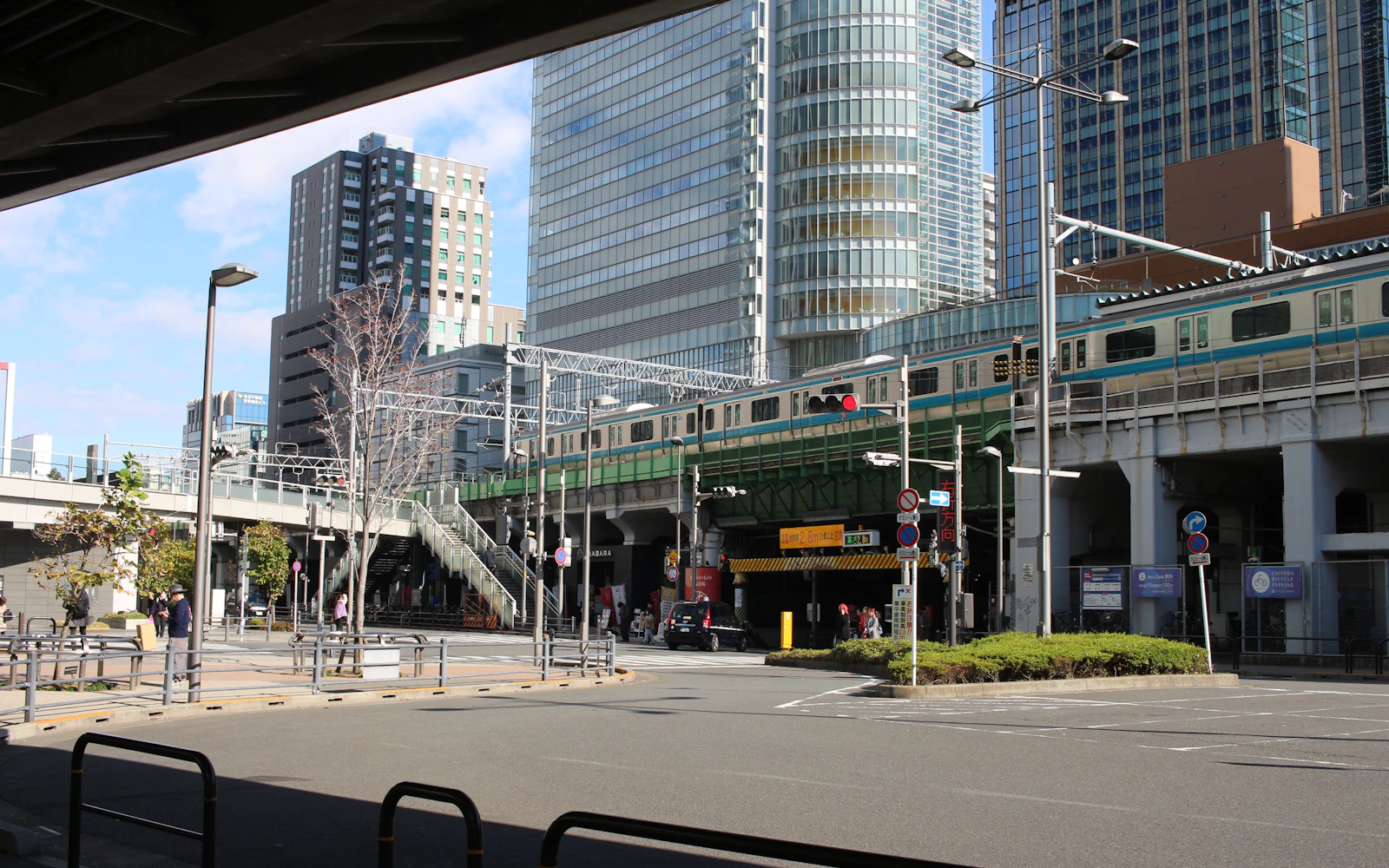
Then map the subject property rather than relying on straight-line distance. Walk the actual route at the time a resident would use it. Record gradients, major roads, crossings, station entrances, weather exposure, opening hours, construction diversions, and whether the benefit lies on the same side of the tracks. A project 600 metres away can be more relevant than one 300 metres away if it materially improves the daily route.
Identify the mechanism that could reach rent or resale value
List the proposed benefits without combining them. A new office population may support weekday retail but add train crowding. A station deck may reduce walking friction. A new hotel may strengthen visitor demand without changing long-term residential rents. Public-space improvements may lift neighbourhood appeal, while a large residential tower adds competing inventory.
For each benefit, name the likely user and the measurable property outcome. If the thesis is stronger rent, identify the tenant segment and the rent evidence that would confirm it. If it is resale liquidity, identify the likely future buyer and what comparable buildings that buyer already selects. If it is reduced vacancy, state the present vacancy assumption and how the project changes it. Vague “area growth” is not a mechanism.
The subject building also has to remain competitive when the project arrives. Age, seismic standard, management quality, reserve funding, layout, light, noise, view protection, and building rules do not improve merely because the district changes. New development can widen the quality gap between a well-run existing building and a poorly maintained one.
Use a written scorecard
- Official status: what has been approved, started, and funded?
- Schedule: which dates are official, and which are marketing estimates?
- Connection: what actual route or use links the project to the property?
- Beneficiary: which tenant or buyer segment values the change?
- Competition: how much new residential or commercial supply also arrives?
- Evidence: do achieved prices or rents support any present premium?
- Property fit: will the building remain attractive when newer stock opens?
- Carry: what are income and costs during construction and delay?
- Downside: does the acquisition still work without the projected uplift?
- Monitoring: which public milestones trigger a revised underwriting case?
Keep the scorecard in the acquisition file and update it at offer, contract, settlement, and major project milestones. This prevents the narrative from becoming stronger in memory while the underlying evidence remains unchanged.
Assign one person to monitor official notices and archive each dated version. A redevelopment thesis without an owner and review calendar quickly becomes stale marketing copy.
Primary sources
- Tokyo Metropolitan Government — List of urban redevelopment projects under way: https://www.toshiseibi.metro.tokyo.lg.jp/machizukuri/kozo_seibi/jujitsu/new_ctiy/sai_tiku/list_saikaihatu/list_zigyotyu
- MLIT — Land-price information and official appraisal resources: https://www.mlit.go.jp/en/totikensangyo/totikensangyo_fr5_000027.html
- MLIT — Real-estate transaction-price information system: https://www.mlit.go.jp/totikensangyo/totikensangyo_tk5_000069.html
- MLIT — Real Estate Information Library: https://www.reinfolib.mlit.go.jp/
- MLIT — Urban redevelopment policy and project information: https://www.mlit.go.jp/toshi/crd_machi_tk_000007.html
Reviewed against the linked primary sources on 23 August 2026. Project status, schedules, and market evidence must be refreshed for the named asset and decision date.
Looking for a shorter starting point? Browse direct answers to common Japan property questions.
Apply this to a real property
Send us the asset or the brief.
We can review whether the property, structure, financing path, and exit logic hold together.