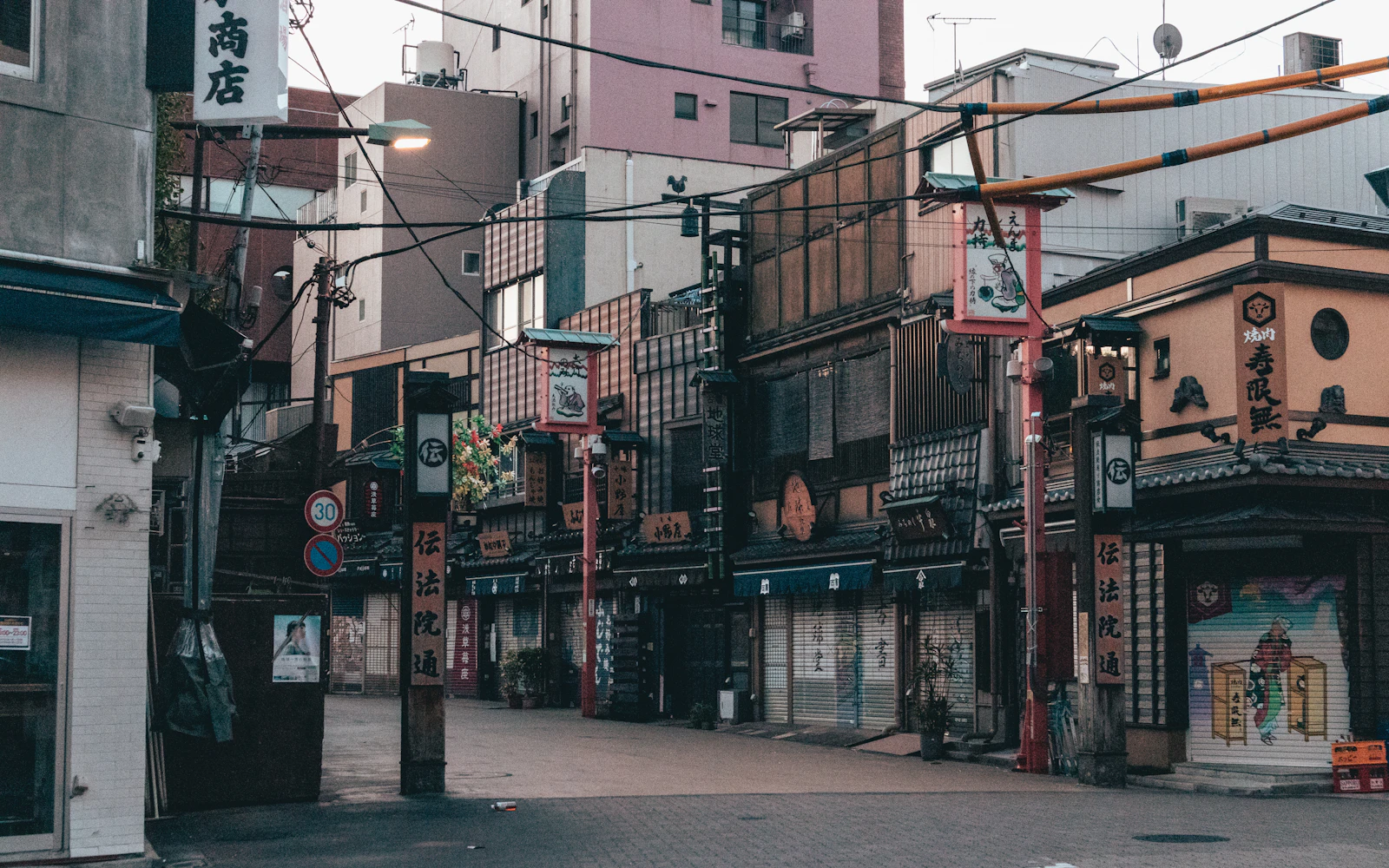
Replace the city question
“Tokyo or Osaka?” combines thousands of micro-markets and housing products. Replace it with a matched decision: one compact unit near a named employment corridor versus another; one family condominium versus another; or two whole buildings serving similar households.
Fix the capital budget, use, holding period and management capacity. A conclusion about one pair of properties is not a permanent ranking of two cities.
Define comparable geography
Measure door-to-destination transport, station service, walking route, surrounding employment and daily amenity. Central-city boundaries and ward names do not create equivalent catchments. Map the tenant's actual trip and alternatives during disruption.
Use municipal population, household and movement data at the smallest sensible scale, but do not infer unit demand from city growth. Connect the subject's layout, price and condition to a specific household.
Normalise price and income
Use completed transactions with the same area definition, tenure, age, unit size, floor, condition and lease status. Keep new construction and resale separate. Calculate effective achieved rent after free rent and incentives, then deduct management, common charges, reserve contributions, vacancy, leasing, tax, insurance, repairs and owner capital reserve.
A higher Osaka gross yield or lower Tokyo gross yield is not a conclusion. The net difference may compensate for age, leasing friction, building capital, finance or exit liquidity.
Compare supply mechanisms
Identify current competing stock and the pipeline supported by official planning or building statistics. New supply can validate demand and improve an area while also competing for tenants and buyers. Record product, delivery timing and price segment rather than quoting one citywide construction number.
For small investor units, check whether the stock is concentrated in similar layouts and whether recent leases required incentives. For family stock, test school, space, storage and owner-occupier resale.
Inspect building risk identically
Apply the same condominium or whole-building diligence in both cities: title, seismic evidence, confirmation and inspection records, association minutes, reserve, long-term plan, lifts, mechanical parking, pipes, façade, waterproofing and insurance. A city narrative must not lower the evidence standard.
Price immediate and timed work in yen. One apparently cheap asset can lose its yield advantage after a special assessment or major equipment cycle.
Model the likely exit
Define whether the property should exit vacant to an owner-occupier, leased to an investor, or with redevelopment potential. Build a completed-comparable range and a sustainable-income range. Stress marketing time, selling cost, tax and the buyer's likely finance.
Use market reports to understand broader direction, not to apply one metropolitan appreciation rate. The next buyer purchases the property and its documents, not the city logo.
Write the investment choice
Present both assets with the same table: all-in cost, net income, downside cash, ten-year capital, management load, key unresolved fact and exit value range. State which assumption creates the advantage. If the winner changes with a small rent or capex adjustment, negotiate more margin or keep searching.
The useful answer may be Tokyo for one objective and Osaka for another. Consistent method is the protection against fashionable but unsupported city stories.
Require a disconfirming case
Before approval, write the strongest reason the losing asset could outperform: better tenant retention, lower capital need, stronger owner-occupier exit or a more resilient transport corridor. Quantify that case with the same definitions. If a small change reverses the ranking, the decision needs price margin rather than confidence language.
Repeat the comparison when an actual property is substituted. A city thesis should never survive after the property facts contradict it. Date every market input and keep currencies, taxes, floor-area definitions and completed-versus-asking status consistent. If information quality differs between the candidates, show lower confidence rather than treating missing data as neutral.
Primary sources
- Tokyo Metropolitan Government — Statistics portal: https://www.toukei.metro.tokyo.lg.jp/
- Osaka City — Statistics portal: https://www.city.osaka.lg.jp/toshikeikaku/page/0000164027.html
- MLIT — Real-estate information library: https://www.reinfolib.mlit.go.jp/
- MLIT — Building starts statistics: https://www.mlit.go.jp/statistics/details/jutaku_list.html
Reviewed 23 August 2026. Exact properties and matched evidence control; citywide figures are context.
Looking for a shorter starting point? Browse direct answers to common Japan property questions.
Apply this to a real property
Send us the asset or the brief.
We can review whether the property, structure, financing path, and exit logic hold together.